The End of an Era
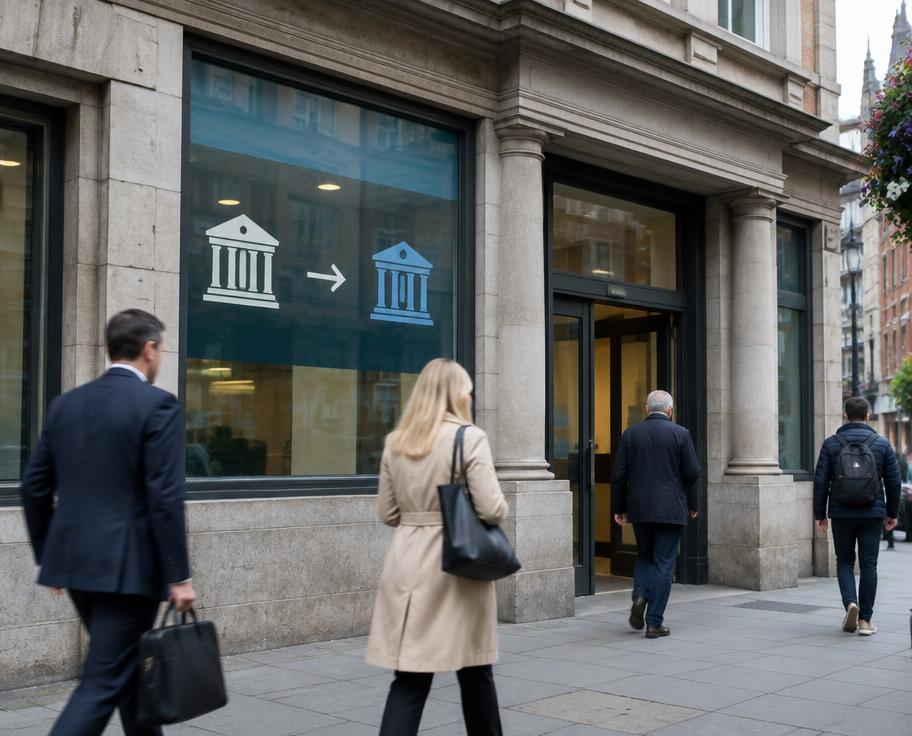
When the Irish government pumped €4 billion into Permanent TSB in 2011 to rescue it from the wreckage of the financial crisis, the question was never whether the State would eventually exit — it was always when, and at what price. Fifteen years later, that question has been answered. Austria's BAWAG Group has agreed to acquire Permanent TSB in a €1.62 billion all-cash transaction, the Irish government has committed to selling its 57.5% stake for €931 million, and a crucial shareholder vote at an extraordinary general meeting is now imminent. When it completes — expected in Q4 2026 or Q1 2027 — it will mark the final exit of the Irish State from the banking sector it was forced to rescue, and the arrival of a new pan-European banking structure in the Irish retail market.
The Deal: What BAWAG Is Actually Buying
BAWAG Group is Austria's fourth-largest bank, headquartered in Vienna, with operations across Austria, Germany, the Netherlands, Switzerland, Ireland and the United States built through a string of acquisitions over the past decade. The PTSB acquisition is its largest single transaction to date and its most significant move into the Irish market. The offer, at €2.97 per share, represents a 26% premium to PTSB's share price at the time of announcement in April 2026, and values the bank at €1.62 billion overall.
PTSB is the smallest of Ireland's three surviving domestic retail banks — the others being AIB and Bank of Ireland — with more than 2,900 employees, a nationwide branch network, and a mortgage-focused business model that holds approximately 19% of the Irish mortgage market. Its Q1 2026 results, published alongside the board's formal recommendation of the BAWAG offer in May, showed total operating income up 10%, net interest margin rising to 2.13%, and business banking lending growth of 18%, with personal term lending more than doubling. The bank's CET1 capital ratio of 17.9% reflects a well-capitalised institution, and its loan-to-deposit ratio of 88% and liquidity coverage ratio of 269% indicate a conservatively managed balance sheet. PTSB CEO Eamonn Crowley defended the agreed price, noting it was the highest offer from a competitive process that attracted six initial proposals and three second-round bids, including approaches from US private equity funds Lone Star, Sixth Street and Centerbridge Partners.
What BAWAG Plans to Do With It
BAWAG's public position on PTSB is notably more constructive than a typical private equity acquisition playbook. BAWAG Group CEO Anas Abuzaakouk has committed to maintaining a meaningful branch presence in Ireland — explicitly described as a "real asset" rather than a liability — while signalling that branches will evolve toward advisory services rather than transaction-focused operations. BAWAG has also indicated it plans a detailed review of product lines available in Austria, Germany and the Netherlands, with a view to rolling them out in Ireland — a signal that PTSB customers could gain access to a broader range of banking products under new ownership than the bank has historically offered. The group has indicated that any fair value gain arising from the transaction would be reinvested in the Irish business.
Following completion, BAWAG's balance sheet will exceed €100 billion in assets, with more than five million customers across seven countries spanning retail and SME banking as well as corporate, commercial real estate and public sector lending. The acquisition positions BAWAG as Ireland's third-largest domestic retail bank with significantly more capital, product capability and European network than PTSB has operated with independently, and Irish Times reporting has suggested BAWAG is considering moving PTSB into public sector and corporate lending — areas where it has not previously competed — to give it a genuine challenger position against AIB and Bank of Ireland in the commercial market.
The Government's Position: A €300m Loss That Tells a Bigger Story
The Irish government's sale of its 57.5% stake for €931 million will result in a loss of approximately €300 million on the specific €4 billion PTSB bailout — a number that has drawn criticism from analysts but that the Department of Finance has consistently contextualised within the broader picture of the State's banking crisis intervention. When the total cash recovery from the three surviving Irish banks — AIB, Bank of Ireland and PTSB — is calculated on a cash-in, cash-out basis, Irish taxpayers will have recouped approximately €30.7 billion from combined bailouts of €29.3 billion between 2009 and 2011, generating a net surplus of approximately €1.4 billion across the sector as a whole. The Department of Finance has placed the total recovery from PTSB specifically at approximately €4 billion once bank levy payments, fees and other receipts are included, which narrows the loss on the PTSB intervention significantly.
Minister for Finance Simon Harris briefed Cabinet colleagues on the agreement when it was announced in April 2026, and the government has committed to voting its 57.5% stake in favour of the transaction at the shareholder EGM. The sale of the government's final AIB shares was completed last year, with the last Bank of Ireland shares disposed of in 2022, meaning the PTSB transaction represents the true conclusion of the State's post-crisis exit from the banking sector.
The Shareholder Vote: Where Things Stand Right Now
The transaction is structured as a scheme of arrangement, overseen by the Irish High Court, which requires at least 75% approval from voting shareholders at the EGM. With the government's 57.5% stake committed to voting in favour, and with more than a fifth of shareholders historically not voting at PTSB's annual general meetings, the deal initially appeared straightforward. However, Irish Times reporting in the week of 24 July 2026 has introduced a degree of uncertainty. Wellington Management, the Boston-based investment firm holding a 6.87% stake in PTSB, filed a stock exchange disclosure showing that more than a quarter of its PTSB shares had been traded internally at €3.01 per share — four cents above the €2.97 offer price — fuelling market speculation that Wellington, or some of its clients, may believe BAWAG should increase its offer before the EGM.
The High Court's oversight of the scheme structure also introduces a potential procedural complication: the court could rule that the transaction requires separate approval from minority shareholders, independently of the government's stake — a majority-of-the-minority requirement that would significantly raise the bar for completion. PTSB's legal advice is understood to be that a single vote is sufficient, but the court has not yet ruled on this point. The dealing disclosures filed by Davy, Goldman Sachs Bank Europe and Syquant Capital through late July 2026 — all publicly available under Irish Takeover Panel rules — reflect the formal oversight framework that applies to PTSB securities during the offer period and confirm that the transaction remains live and actively traded around.
What It Means for PTSB Customers and Employees
For PTSB's more than 2,900 employees, the period of uncertainty ahead of the EGM and the subsequent regulatory approvals process is, understandably, the most immediately consequential dimension of the transaction. BAWAG's public commitment to the branch network provides some reassurance, and the prospect of expanded product ranges and stronger capital backing from a European banking group with €100 billion in assets represents a genuine operational upgrade for a bank that has operated as the smallest and most constrained of the three Irish domestic banks since its restructuring after the crisis.
For customers, the transition period — expected to run through late 2026 or into 2027 pending regulatory clearances — is unlikely to produce immediate visible change. BAWAG has indicated that the replacement of PTSB technology with group systems would trigger a large non-cash writedown of intangible assets, suggesting a phased technology migration rather than an immediate systems switch, and the existing products, services and branch footprint are expected to remain intact through the completion process.
The Bottom Line
The BAWAG acquisition of PTSB closes fifteen years of State ownership that began with a crisis-era bailout and ends with the Irish government receiving €931 million for its stake in a bank that now carries a mortgage market share of approximately 19%, a strengthened balance sheet and a Q1 2026 operating performance that demonstrated the business was moving in the right direction before the sale. The shareholder vote, the High Court process and the Wellington Management position mean it is not quite a done deal yet — but the direction of travel is clear, and when it completes, Ireland's retail banking landscape will have a new and more European character than it has carried since the three-bank structure that survived the crisis first took shape.