When OpenAI CFO Sarah Friar stood up in Dublin this week to announce 200 new jobs in Ireland, the line that landed hardest was not about the headcount.
"Since we opened our EU headquarters in Dublin three years ago, Ireland has been critical to our success in Europe."
Critical. Not useful. Not convenient. Critical. From the world's most talked-about technology company — the organisation that built ChatGPT, shook every industry on the planet, and is now valued at $500 billion — that is a statement worth paying close attention to.
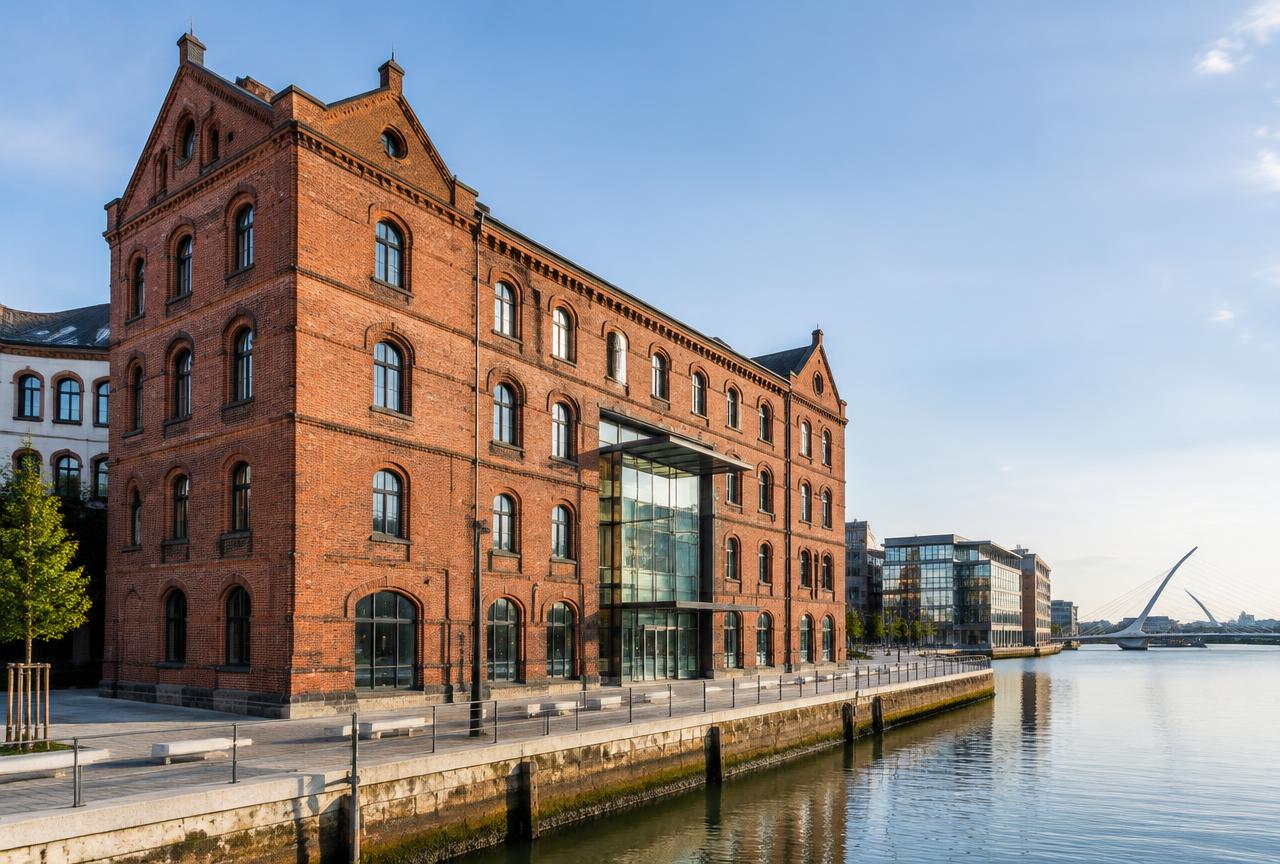
The 200 new roles announced on Monday, based at a new Applied AI Lab within OpenAI's EU headquarters, bring the company's total Irish jobs commitment this year to 450. Added to the 120 people already employed here, OpenAI is on course to have close to 600 people working in Ireland before the end of 2027. And from December, they will all have a home worthy of the ambition: the Tropical Fruit Warehouse in Dublin, one of the most distinctive office spaces in the city, becomes OpenAI's new EU headquarters.
From a $1 Billion Bet in 2015 to a $300 Billion Giant
To understand what OpenAI's commitment to Ireland means, it helps to understand how far and how fast this company has travelled.
OpenAI was founded in San Francisco in 2015 with a $1 billion pledge from a group of investors and technologists that included Sam Altman and Elon Musk. It was established as a non-profit with a single stated mission: to ensure that artificial general intelligence benefits all of humanity. It was, by Silicon Valley standards, an unusual animal — more research lab than startup, more philosophical project than product company.
That changed in November 2022, when OpenAI launched ChatGPT. What followed was the fastest consumer technology adoption in history. ChatGPT reached one million users in five days. It hit 100 million monthly active users in two months — a milestone that took Instagram two and a half years. By 2026, ChatGPT had around 800 million weekly active users and approximately 22 million paying subscribers globally.
The commercial engine that grew behind it is staggering. OpenAI's annual recurring revenue stood at $3.4 billion in early 2024. By the first quarter of 2026 it had reached $12.7 billion — nearly a fourfold increase in two years. Monthly revenue now runs at approximately $1.06 billion. The company has raised around $57.6 billion in total funding since its founding, with a $40 billion round led by SoftBank in March 2025 pushing its valuation to $300 billion, before a secondary share sale later that year lifted it to $500 billion. It employs roughly 3,800 people globally, up from around 2,000 just eighteen months ago.
What the Dublin Expansion Actually Involves
The October announcement is not just a headcount story. It is a statement about what OpenAI wants to build in Ireland.
The centrepiece is the new Applied AI Lab — a technical facility embedded within the EU headquarters that will house engineers working directly at the frontier of how OpenAI's technology gets deployed in the real world. The roles being recruited include forward deployed engineers, who work side by side with enterprise customers to build and implement AI applications; solutions engineers; and privacy engineers, whose specific brief is to build safeguards and tools that protect data as new AI systems go live.
That last point matters. Privacy engineering has become one of the most strategically sensitive functions in any technology company operating in Europe, where GDPR enforcement has intensified and the EU AI Act is reshaping what compliance looks like for AI systems. The fact that OpenAI is building this capability in Dublin — Europe's regulatory hub and the home of the Data Protection Commission — is not a coincidence.
Beyond the technical roles, the expansion covers sales, go-to-market, and user operations — the commercial and support infrastructure needed to serve a rapidly growing European customer base.
Building the Irish Ecosystem, Not Just an Office
What distinguishes this announcement from a standard FDI jobs press release is the breadth of what OpenAI is committing to alongside the headcount.
The company is extending its OpenAI for Ireland programme, which provides access to its tools and credits for Irish startups, SMEs, and builders. It is expanding its partnership with Dogpatch Labs, Dublin's leading startup hub, through a new Founder Cafe initiative that will give approximately 150 high-potential Irish founders hands-on training in ChatGPT, Codex, and the OpenAI API. An SME Academy series of events will roll out across the country, starting in Cork in November 2026. And the Patch programme — OpenAI's initiative supporting builders aged 16 to 21 — continues to run in Ireland.
This is a company that is investing in the supply side of the Irish AI ecosystem, not just extracting value from it. That matters for the long term. The founders being trained in Dogpatch Labs today are the companies that will be OpenAI customers — and potentially OpenAI competitors — a decade from now.
Taoiseach Micheál Martin, who attended the announcement alongside IDA Ireland CEO Michael Lohan, described the investment as "a vote of confidence in the strength of our people, economy and ecosystem." He connected it explicitly to Ireland's EU Presidency and to the International AI Summit being hosted in Dublin — positioning this week's announcement as part of a broader national story about Ireland's place in the global AI economy.
Why Ireland, and Why Now
The question worth asking is why OpenAI, with its pick of European capitals, continues to deepen its commitment to Dublin specifically.
The answers are familiar but they bear restating. Ireland offers a highly educated, English-speaking workforce with deep technology sector experience built over decades of FDI from the companies that came before — Google, Meta, Apple, Microsoft, and dozens more. The corporate tax environment remains competitive. The legal and regulatory infrastructure is sophisticated. And the technology talent pool — while under pressure from demand — is real and growing.
But there is something more specific at play with OpenAI. Dublin is where the EU's data protection authority sits. It is where the AI Act's application to frontier models will be interpreted and enforced in practice. For a company building the most powerful AI systems in the world, being embedded in that regulatory conversation — present in the city where the rules get made — is not just convenient. It is strategically essential.
IDA Ireland's Michael Lohan said the expansion highlights "the strength of Ireland's technical talent and business environment." What it also highlights is that Ireland has managed, for now, to hold its position as the place where the world's most consequential technology companies choose to put down their deepest European roots.
The Bottom Line
OpenAI arriving in Ireland three years ago was significant. OpenAI committing 450 new jobs, a flagship Applied AI Lab, a new EU headquarters, and a suite of ecosystem programmes in 2026 is something larger. It is a declaration that Dublin is not a regional outpost for one of the world's most important companies — it is central to how OpenAI builds, deploys, and governs its technology across Europe. For Ireland's economy, its talent base, and its ambition to be taken seriously in the global AI conversation, that is as strong an endorsement as it gets.