The Gap in Brain Health
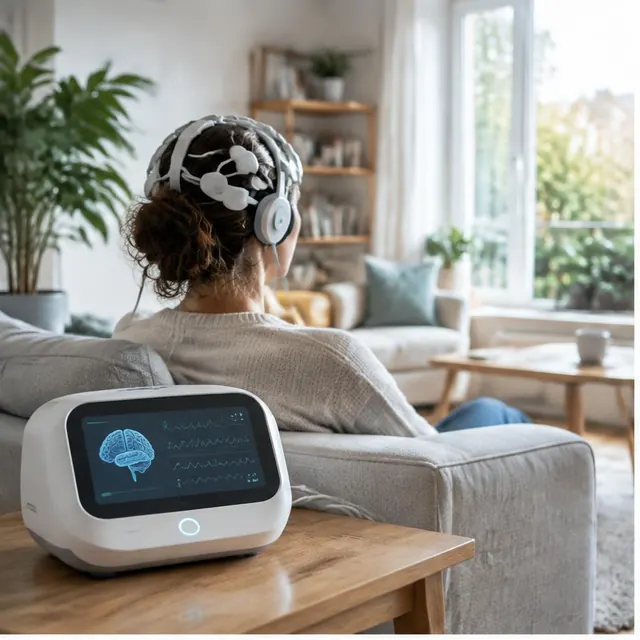
For most of the conditions that affect the brain — depression, chronic pain, cognitive decline, neurological rehabilitation after stroke or injury — the treatment options available to patients outside a clinical setting are limited almost entirely to medication. Drug therapies carry side effects, require ongoing management and do not work for everyone. Non-pharmacological alternatives — neurostimulation, transcranial magnetic stimulation, biofeedback — have shown promising clinical results in hospital and clinic settings but have historically required expensive specialist equipment, trained clinical supervision and repeated patient attendance at healthcare facilities. The result is a meaningful gap between what brain stimulation technology can do and what patients can actually access.
Cork-based medtech startup NeuroBell was founded to close that gap — building wearable neurostimulation devices that can deliver clinically meaningful brain stimulation outside of a hospital setting, making the therapy accessible to patients in their own homes and reducing the burden of repeated clinical visits for conditions where long-term treatment consistency is critical to outcomes.
The Raise
Earlier in July 2026, NeuroBell confirmed a $5.5 million funding round led by Elkstone, with participation from Parkview Health, Furthr, Atlantic Bridge, MedTech Syndicate and Enterprise Ireland. The investor lineup reflects the company's dual positioning at the intersection of consumer medtech and clinical-grade neuroscience — Elkstone and Atlantic Bridge providing the venture capital backing, Parkview Health bringing US healthcare system credibility and commercial access, and MedTech Syndicate adding sector-specific expertise in medical device scaling.
The round gives NeuroBell the capital to advance its device through clinical validation and toward regulatory clearance — the critical milestone for any medical device company seeking to enter the US and European healthcare markets with a product that makes specific therapeutic claims. The company's Cork base positions it within Ireland's established medical device corridor, where the accumulated presence of companies including Boston Scientific, Stryker and Medtronic has created a talent pool, supply chain and regulatory expertise ecosystem that Cork-based medtech startups can draw on in a way that would take years to build from scratch in a less established location.
Why Wearable Neurostimulation Is a Growing Field
The scientific basis for non-invasive brain stimulation as a therapeutic tool has been building in the clinical literature for over two decades. Transcranial direct current stimulation, transcranial magnetic stimulation and peripheral nerve stimulation have all generated clinical trial evidence across a range of conditions including treatment-resistant depression, chronic pain, post-stroke rehabilitation, tinnitus and attention disorders. What has historically limited their clinical adoption is the infrastructure requirement — the devices used in clinical trials are not designed for home use, require trained operators and cost tens of thousands of euros per unit.
The commercial opportunity in developing clinically validated, consumer-accessible neurostimulation devices is therefore substantial — and global. The neurostimulation market is projected to grow significantly through the late 2020s, driven by the combination of an ageing population, growing prevalence of neurological conditions, increasing evidence base for non-pharmacological therapies and a healthcare system incentive to shift treatment away from expensive inpatient settings toward lower-cost community and home environments. NeuroBell's targeting of this market from a Cork base, with a clinical validation strategy backed by experienced healthcare investors, places it in a competitive but commercially significant field at an early enough stage to build meaningful intellectual property and regulatory advantage.
The BIC Network's Role
NeuroBell's development sits within a broader Irish early-stage support ecosystem that has been quietly strengthening. Start-ups supported by Ireland's network of Business Innovation Centres secured €34 million in funding in 2025, with €26.5 million through the Innovative High Potential Start-Up programme and a further €7.5 million via the Pre-Seed Start Fund. The four regional BICs — AxisBIC, Furthr, Propelor and WestBIC — backed 110 companies in their funding applications over the year, providing the structured early-stage support that bridges first-time founders and institutional funding routes. NeuroBell's Furthr participation in the round reflects exactly this ecosystem dynamic — a BIC that started with early-stage support maintaining its stake as the company attracts larger international capital.
The Bottom Line
NeuroBell has identified a real clinical gap — effective brain stimulation therapy that patients can access at home — and assembled the investor base and clinical expertise to pursue it credibly from Cork. The $5.5 million raise, with US healthcare partner Parkview Health in the syndicate, gives it both the capital and the commercial access pathway to advance toward regulatory clearance and market entry in a field where the scientific evidence is building and the commercial opportunity is substantial.