Two Announcements, One Direction of Travel
On Wednesday 23 September 2026, McDonald's Chairman and CEO Chris Kempczinski stood before investors at the company's Chicago headquarters and outlined the most ambitious capital investment programme in the fast food chain's history. The plan — called McDonald's NEXT — commits $8.5 billion over the next decade to modernising more than 46,000 restaurants globally, deploying AI-powered ordering technology, launching a major employee retraining programme, and expanding into product categories where McDonald's believes it has market share to gain. The announcement sent McDonald's shares down nearly 5% on the day — investors taking time to absorb both the scale of the commitment and the length of the runway before the returns arrive — but the strategic logic behind it is straightforward: in a fast food market where customer traffic in many developed markets is flat, the only path to growth is to take share from competitors and extract more productivity from existing restaurants.
For Ireland, that global announcement arrives on top of a specific and significant commitment made earlier this year. In March 2026, McDonald's announced a €150 million investment in its Irish business over the next five years — opening 25 new restaurants at a rate of five per year, creating approximately 1,750 new jobs, and planning to open its 100th Irish restaurant in 2027 to coincide with the 50th anniversary of its arrival on Grafton Street in Dublin in 1977. The two announcements together — the global NEXT programme and the Ireland-specific €150 million expansion — tell a consistent story about a company that is investing seriously and simultaneously in both its long-term technology and operational reinvention and its physical presence in markets it sees clear growth opportunity in.
The Global Plan: What McDonald's NEXT Actually Does
The NEXT strategy is built around three interconnected investment areas. The first is restaurant modernisation — a physical upgrade of McDonald's locations globally that will cost approximately $800,000 per US location, with McDonald's providing approximately $8.5 billion in total partnering support to franchisees through a combination of rent relief and capital support through 2036, with approximately $5 billion of that committed through 2030.
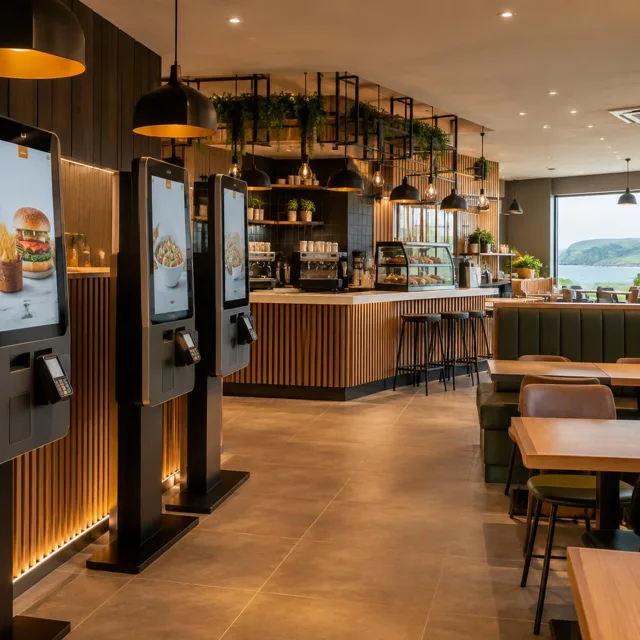
The restaurant upgrades are comprehensive. More efficient kitchen layouts designed around the current reality that McDonald's serves customers through dine-in, drive-thru, walk-in and delivery channels simultaneously rather than the single-channel model for which most of its older kitchens were designed. Delivery lockers for online order collection, removing the friction at the counter that slows throughput. Improved drive-thru operations. More visible coffee preparation areas — McCafé beverage preparation brought into customer view as a quality signal. Redesigned customer dining spaces. And, notably, the return of smaller PlayPlace areas with slides and traditional play features for families — a deliberate signal that McDonald's intends to reclaim the family occasion that some of its restaurant evolution away from play areas had eroded.
McDonald's estimates these investments will generate approximately $100,000 in annual cash flow improvement for the average US restaurant, with a four-year payback for franchisees after the company's partnering contribution.
Archy: The AI System at the Centre of the Technology Investment
The technology dimension of the NEXT plan is anchored by the scaling of an AI-powered ordering system that McDonald's is calling ArchIQ — described in investor materials as a system designed to automate tasks including inventory management and scheduling, and to improve kitchen operations through AI-assisted process management. McDonald's is also deploying smart scales designed to improve order accuracy — currently deployed at approximately 10,000 restaurants globally and expected to reach 20,000 by 2028.
The AI investment extends to the drive-thru, where automated voice ordering systems have been in pilot across a number of markets and where the combination of AI ordering, kitchen management and delivery logistics is intended to meaningfully reduce the time from order to collection. For a company that serves more than 70 million customers daily across 46,000 restaurants, even modest improvements in throughput per location translate into very significant aggregate gains — which is the financial logic behind the scale of the technology investment.
McDonald's is also launching a new media network — joining the growing number of large retailers and restaurant chains that are building their own advertising platforms around the customer data their digital and loyalty systems generate. For McDonald's, which has one of the world's largest loyalty programme memberships through its mobile app, the media network represents a new commercial revenue line that sits alongside the restaurant business rather than depending on it.
The Menu: Chicken, Protein and the GLP-1 Opportunity
The product strategy embedded in the NEXT plan reflects specific competitive pressures and a specific demographic opportunity. On chicken — where McDonald's acknowledges it has market share to gain against competitors like Chick-fil-A and KFC — the company plans to introduce hand-breaded chicken options, expand McNuggets flavours and sauces, grow its McCrispy range and test grilled chicken sandwiches and wraps. The strategic target is to gain 1.5 percentage points of market share in chicken by 2030.
The GLP-1 dimension of the menu strategy has received particular attention. The rapid adoption of GLP-1 weight loss medications — Ozempic and Wegovy and their successors — has created a consumer segment that eats less overall but places higher value on protein-rich options that provide sustained satiety. McDonald's is developing specific menu items targeted at this segment — higher-protein options that deliver nutritional value alongside the convenience and price point that the core McDonald's proposition is built around. It is an acknowledgment that the GLP-1 wave is reshaping how a significant and growing portion of the population thinks about food choices, and that fast food chains that develop a credible protein-forward offer will be better positioned with that consumer segment than those that do not.
The Ireland Story: €150 Million, 25 New Restaurants, 1,750 Jobs
Against the backdrop of the global NEXT announcement, the Irish investment picture that McDonald's set out in March 2026 carries additional significance. The company currently operates 96 restaurants across Ireland, owned and operated by 18 Irish franchisees and employing more than 7,000 people — contributing over €414 million to the Irish economy annually. The €150 million five-year investment plan, announced at a business breakfast event in Cork, will bring that restaurant count to approximately 121 by the end of 2030 and will create 1,750 additional jobs across the new locations.
Mike Spencer, Vice President of Development at McDonald's UK and Ireland, was direct about both the ambition and the milestone it is building toward: "The outlook for McDonald's in Ireland is very positive, and we have a clear plan to invest more than €150 million here over the next five years. That investment will support the opening of up to five new restaurants each year — around 25 in total — and the creation of approximately 1,750 new jobs across the country. We plan that our 50th anniversary in Ireland next year will coincide with the opening of our 100th restaurant in Ireland."
The expansion kicked off with the opening of a new drive-thru restaurant in New Ross, County Wexford, in February 2026 — the first of five planned 2026 openings. Individual restaurant investments in refurbishment have also been underway — the Cork Douglas restaurant received a €3 million investment as part of the company's Convenience of the Future programme, which redesigns existing locations to reflect the variety of ordering methods now available and the changed customer expectations that digital ordering and delivery have produced.
Minister of State Jerry Buttimer, attending the March 2026 announcement, welcomed the investment as "a strong endorsement of the value of long-term investment in Ireland's communities" — language that reflects both the employment significance of 1,750 new jobs and the broader signal that a business with McDonald's scale choosing to invest in Ireland at this level sends to other international companies assessing where to direct their capital.
The Irish franchisee dimension of the investment is also worth noting. All 96 of McDonald's current Irish restaurants are independently owned and operated by Irish franchisees — small and medium-sized business owners who employ local workforces, source from Irish suppliers and reinvest their operating returns in the communities where their restaurants operate. The 25 new restaurants being added will follow the same model, meaning the €150 million investment flows primarily through Irish-owned businesses rather than directly from a corporate centre overseas.
The Convergence: What the Two Plans Mean Together
The global NEXT plan and the Irish expansion plan are not independent announcements that happen to have been made in the same year — they are expressions of the same strategic direction at two different scales. The physical modernisation of McDonald's restaurants that the NEXT plan funds globally will roll out to UK and Ireland restaurants in 2027, according to investor day materials, meaning that the 96 current Irish restaurants and the 25 new ones being added will receive the ArchIQ AI ordering technology, the redesigned kitchens, the delivery lockers and the McCafé upgrade that the global plan specifies. Ireland is not a peripheral market receiving a distant echo of a global strategy — it is a market where a specific and substantial investment is running in parallel with and feeding into the global transformation.
For Irish business owners, the McDonald's investment story provides a useful reference point on several dimensions: the scale at which technology investment in operations can be commercially justified when it improves throughput and cash flow at unit level; the value of a structured employee training and development programme — McDonald's has partnered with Retail Ireland Skillnet since 2022 and its first apprenticeship graduates completed in 2024 — as both a talent retention mechanism and a quality improvement tool; and the specific opportunity that the GLP-1 dietary trend represents for any food business willing to think seriously about protein-forward product development.
The Bottom Line: McDonald's has committed $8.5 billion globally to its NEXT transformation programme and €150 million specifically to its Irish expansion — 25 new restaurants, 1,750 new jobs and the 100th Irish location opening in the anniversary year of 2027. The global strategy deploys AI-powered ordering, kitchen redesign, menu expansion into chicken and protein, and a major employee retraining initiative. The Irish strategy adds physical presence in communities currently underserved by the network. Together, they describe a company that is investing in both the short-term Irish employment and community dimension of its business and the long-term technology and operational transformation that will determine its global competitiveness through the 2030s.