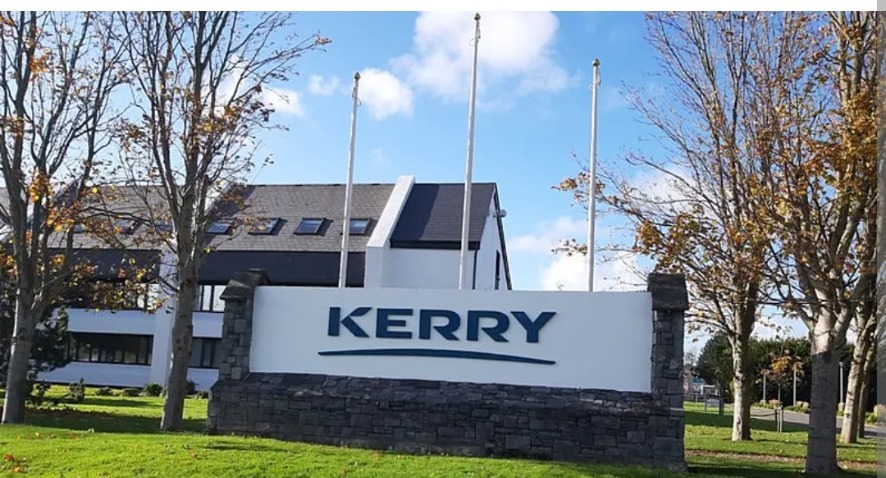
From a small dairy co-operative founded in County Kerry in 1972, Kerry Group has grown into one of the most formidable food and beverage companies on the planet. Today it operates in more than 150 countries, employs over 20,000 people globally, and generates billions of euros in revenue each year. It is one of Ireland’s most significant corporate success stories — a company that started on the farms of the Kingdom and now shapes what people eat and drink from Manhattan to Mumbai. And in 2026, despite a challenging global environment, Kerry Group is pushing forward with quiet confidence, backed by strong half-year results, an ambitious decade-long strategy, and a management team that has learned to navigate volatility without losing sight of growth.
The Numbers Behind the Story
Kerry Group’s first-half 2026 results, reported in July, told a story of operational resilience in the face of real-world headwinds. Group revenue came in at €3.34 billion — a reported decline of 3.7% on the same period last year, largely driven by currency translation effects as the euro strengthened against major trading currencies. But strip out the currency noise and the underlying picture is significantly more positive. Volume growth across the business was 3.3% in the first half, with the second quarter accelerating to 3.5% — a performance that Kerry Group says outpaced the broader food and beverage market in all three of its operating regions.
Profitability continued to improve. Group EBITDA reached €558 million, up marginally on H1 2025, with the EBITDA margin rising 60 basis points to 16.7% — a direct result of the company’s ongoing Accelerate 2.0 efficiency programme, which is systematically reducing costs, rationalising the manufacturing footprint, and improving operational leverage across the business. Adjusted earnings per share rose 7.9% on a constant currency basis to 214.1 cents, and the interim dividend was lifted 10% to 46.2 cents — a clear signal from the board that management is confident in the trajectory of the business.
Free cash flow came in at €262 million, with full-year EPS guidance maintained at 6% to 10% constant currency growth. Kerry Group also announced a €300 million share buyback programme — a statement of financial strength that few companies in any sector can make so matter-of-factly. That buyback, running through to the end of 2026, reflects a balance sheet that remains well capitalised even as the company continues to invest in growth.
And the story has already moved on since July. Kerry Group’s third-quarter trading update, published on 22 October, showed volume growth of 3.6% for the quarter — again ahead of the wider food and beverage market — with the EBITDA margin expanding by a further 50 basis points on the back of Accelerate 2.0. Full-year constant currency EPS guidance was maintained, and the company flagged its intention to initiate a further share buyback programme. In plain terms: the trends this story describes are still running in Kerry Group’s favour heading into the final months of 2026.
A Truly Global Irish Business
What makes Kerry Group’s performance particularly striking is the geographic breadth of its growth. The Americas — Kerry Group’s largest region at €3.7 billion of annual revenue — delivered volume growth of 3.7% in H1, driven by strong foodservice performance and ongoing innovation in taste and nutrition. The Asia Pacific, Middle East and Africa (APMEA) region was even stronger at 4.9%, reflecting the accelerating appetite for processed and convenience food across emerging markets. Europe — historically Kerry Group’s home market — was the quieter performer at 0.5% volume growth, reflecting the softer consumer environment across the continent.
This global spread is one of Kerry Group’s most significant structural advantages. It means no single market, no single currency, and no single consumer trend can fundamentally derail the business. When European consumer confidence is soft, APMEA is growing at nearly 5%. When currency headwinds hit reported revenue, underlying volume growth holds firm. The business has been engineered, through decades of acquisition and organic investment, to be genuinely diversified — not just in geography, but in customer type, product category, and end-market application.
What Kerry Group Actually Does
It is worth pausing here, because Kerry Group is not a household name in the way that some consumer brands are — yet its ingredients, taste solutions, and nutritional technologies are present in an extraordinary proportion of the food and drinks that consumers buy every day around the world. Kerry Group is principally a business-to-business operation: it supplies taste and nutrition ingredients to food and beverage manufacturers, foodservice operators, and consumer goods companies globally.
That means Kerry Group’s business is underpinned by long-term supply agreements with some of the world’s largest food companies. When a multinational food brand launches a new low-sodium product, a plant-based snack, or a fortified health drink, there is a significant chance that Kerry Group’s technology and ingredients are inside it. The company has deep expertise in savoury taste, salt and sugar reduction, botanicals, fermentation, and biotechnology solutions — categories that are growing in commercial importance as consumers and regulators alike push food manufacturers toward healthier, cleaner formulations.
The Road to 2030
What is genuinely exciting about Kerry Group right now is the ambition of its medium-term strategy. At the H1 2026 results, CEO Edmond Scanlon and his team set out formal 2030 financial targets that represent a significant step-change from where the business is today. The goals include volume growth of 3% to 5% per annum from 2027 to 2030, an EBITDA margin of 20% to 21% — up from 16.7% today — high single-digit adjusted EPS growth on a constant currency basis, cash conversion above 85%, and a return on average capital employed of 12% to 13%.
These are not vague aspirations. They are specific, measurable commitments from a management team that has already demonstrated it can deliver margin improvement through the Accelerate 2.0 programme. Getting from a 16.7% EBITDA margin to 20-21% over four years requires sustained execution — continued efficiency gains, portfolio optimisation, pricing discipline, and the kind of innovation investment that allows Kerry Group to command premium pricing in its categories. But the infrastructure is there. New taste facilities in Türkiye and the Middle East, continued investment in customer innovation centres globally, and a strengthening biotechnology platform all point to a business that is investing for the next phase of growth rather than simply harvesting existing positions.
Kerry Group’s Irish Roots — Still Central to the Story
For all its global scale, Kerry Group’s Irish identity remains real and meaningful. The company was founded through a co-operative structure by farming families across Munster, and the original Kerry Co-Op still holds a significant stake in the business — a link back to the company’s agricultural origins that is unusual for a company of this scale and sophistication. Kerry Group’s headquarters remain in Tralee, County Kerry, and the company continues to source Irish dairy ingredients for significant parts of its portfolio.
That origin story matters for Ireland. Kerry Group is not simply an Irish company that happened to grow big — it is a demonstration of what is possible when Irish enterprise, Irish agricultural heritage, and international ambition are combined over the long term. The company has created thousands of direct and indirect jobs in Ireland, invested heavily in R&D on the island, and demonstrated that a company founded in rural Ireland can compete and win at the very highest level of global business.
The Bottom Line
Kerry Group enters the second half of 2026 in strong shape. Volume growth is outpacing its markets, margins are expanding, the balance sheet is robust enough to support a €300 million buyback, and a clear set of 2030 targets has been set for investors and employees alike. The global food industry faces genuine uncertainty — from geopolitical disruption to shifting consumer behaviour and cost inflation — but Kerry Group has built a business resilient enough to grow through it. As Irish corporate success stories go, this one is still very much being written.