NVIDIA’s European expansion makes the scale of the opportunity clear. In its published account of GTC Berlin 2026, the company says it has committed nearly $10 billion to Europe’s technology ecosystem and is working with more than 12,000 partners. That is a substantial commitment to the companies, skills and infrastructure needed to bring AI into everyday business. For Ireland, the important question is how to translate that wider European momentum into sustainable investment at home.
The investment reaches beyond a single building or a single model. NVIDIA’s European announcements cover AI companies, industrial computing and partnerships across the technology ecosystem. Its France announcement includes planned investments in businesses working in healthcare, materials discovery, physical AI and business planning. The message is clear: Europe is becoming a significant part of the AI investment landscape, and countries with established technology foundations have an opportunity to compete for the next phase.
Ireland has those foundations. The question being asked in boardrooms and government departments alike is whether it has the ambition — and the grid capacity — to fully capitalise on what is coming.
The Global Backdrop: Investment Across the AI Economy
The AI infrastructure investment cycle stretches across several connected industries. Cloud companies need computing capacity, AI developers need access to powerful processors, and businesses adopting AI need reliable services that can handle their data. That creates demand for data centres, networking, cooling equipment and the energy systems supporting them. Ireland’s opportunity sits within that wider chain rather than resting on a single global spending forecast.
The distinction between an announced investment, planned spending and completed infrastructure matters. Capital commitments do not automatically become operating facilities, and a headline figure does not tell an investor whether a particular site can secure electricity or skilled staff. For Ireland, the commercially useful question is where it can deliver dependable capacity and specialist expertise. That is a more practical starting point than assuming every euro of European investment is available to every location.
Europe is a central part of that picture. European Commission initiatives to expand cloud and AI-computing capacity reflect the strategic importance of infrastructure that businesses and public bodies can use with confidence. Data protection, security and control over sensitive information also influence purchasing decisions. Those considerations should not be confused with a blanket AI Act requirement to locate all computing in Europe; they are part of a broader policy and commercial conversation.
What Ireland Has Already Built
Ireland’s technology FDI position did not happen by accident, and it does not rest on tax rate alone. The country has built a concentration of technology talent, infrastructure and institutional knowledge over several decades. That accumulated experience matters when companies need people who can operate complex services, work across international markets and support customers with demanding requirements. It gives Ireland a credible foundation from which to compete for sophisticated inward investment.
The data centre story illustrates the scale of that existing footprint. The CSO’s latest full-year release, published in July 2026, shows that data centres used 23% of Ireland’s metered electricity in 2025, compared with 22% in 2024 and 5% in 2015. The CRU cites an EirGrid forecast of 31% of national electricity demand by 2034, based on currently contracted demand. These are different measures and time horizons, but together they make clear why electricity capacity is central to the investment discussion.
Ireland already has experience supporting international cloud and data-centre operations, alongside the fibre connections and professional services that such businesses need. That does not mean every existing facility is suitable for every AI workload, or that expansion is automatic. It does mean the country can build on operational knowledge rather than starting from scratch. For investors, that is a useful advantage when assessing delivery risk.
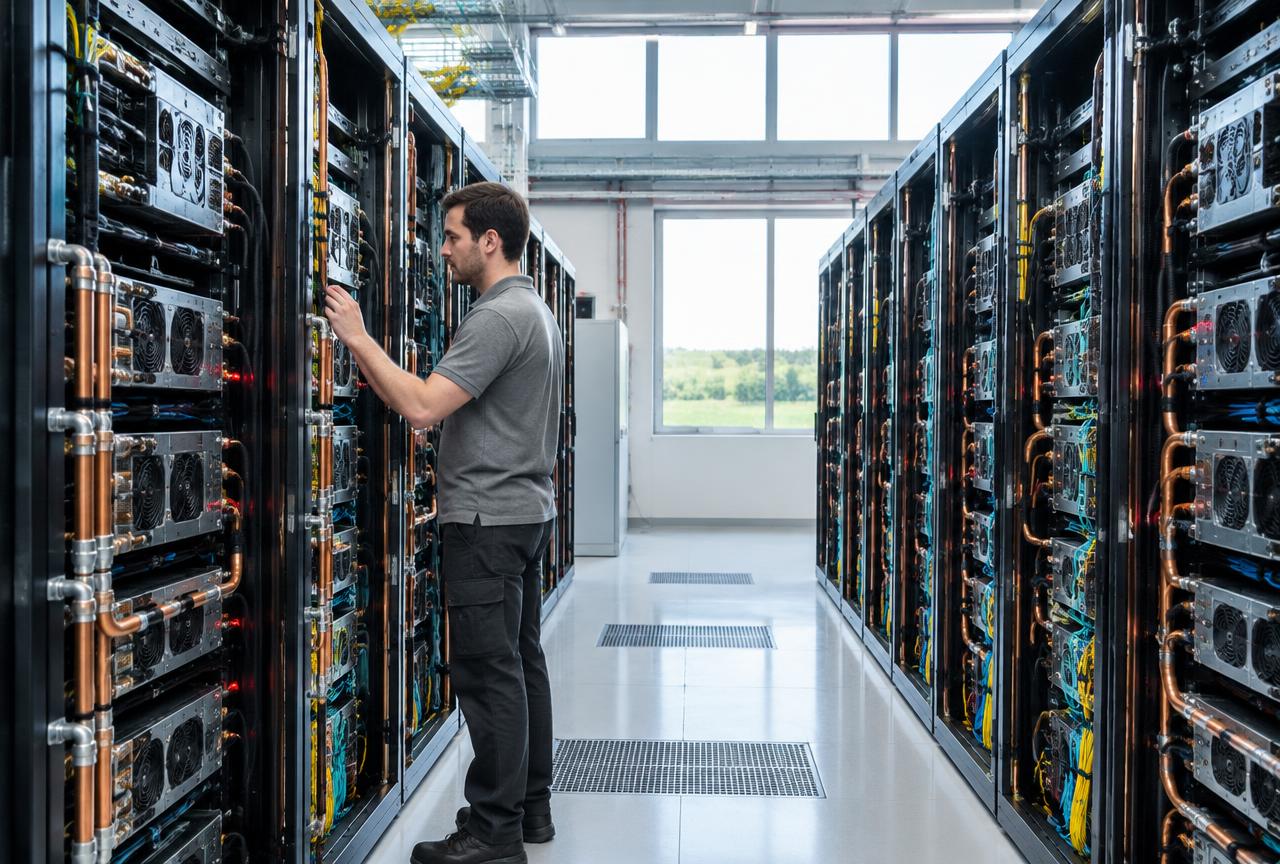
This physical infrastructure — power connections, fibre, cooling systems and operational expertise — is exactly what compute investment needs. A proposed AI facility must be assessed as an integrated project, not simply as a building with servers inside. Its ability to connect to the grid, recruit staff and operate reliably will shape whether it becomes commercially useful capacity. Ireland’s existing ecosystem provides a starting point, while each new project still has to make its own case.
The 2026 FDI Signal: AI Is Choosing Ireland
The H1 2026 IDA Ireland results provide a current measure of the country’s wider investment appeal. IDA reported 190 investments with commitments for 10,410 jobs in the first six months of the year. Those are job commitments rather than a count of positions already filled, an important distinction when judging delivery. The figures demonstrate an active investment pipeline, although they should not all be described as AI infrastructure projects.
OpenText announced a €105 million Irish investment with 400 planned jobs across Cork and Galway over three years, covering agentic AI, sovereign cloud and related capabilities. Separately, Anthropic’s European expansion announcement confirms its Dublin presence and more than 100 new roles across Europe, rather than assigning that entire number to Ireland. These announcements show how the opportunity extends beyond physical compute. Software, deployment, security and customer-facing expertise are also part of the investment story.
Across the 190 investments, IDA classified 57 as research, development and innovation projects. That matters because these activities build expertise that can support further investment over time. Engineering, product development and research bring different requirements from routine administration, including specialist talent and connections with the wider innovation ecosystem. Their presence helps explain why skills development belongs alongside energy capacity in any discussion about Ireland’s next phase of FDI.
The NVIDIA Opportunity: Where Ireland Fits
NVIDIA’s European push spans the companies and infrastructure needed to develop and deploy AI. For customers handling sensitive information, sovereignty can involve control over data, access, security and operations rather than merely the location of a server. European policy initiatives are encouraging more computing capacity, but individual projects still depend on commercial demand and local delivery conditions. Ireland’s opportunity is to offer a credible combination of those conditions.
Ireland’s position as an English-language EU market, with an established legal and professional services sector, is part of that proposition. OpenText’s planned sovereign-cloud expansion illustrates the type of business choosing to invest here. Such announcements do not guarantee that other companies will follow, but they provide concrete examples of the capabilities Ireland can offer. The challenge is to turn that experience into a proposition that can be delivered consistently.
Energy is the central practical constraint. The CRU’s connection policy requires data centres covered by the new framework to meet at least 80% of their annual demand through additional renewable electricity projects generating in Ireland, with a six-year glide path for development. It also addresses grid constraints and security of supply. That makes renewable generation and network planning part of the investment proposition itself, rather than an issue to deal with after a facility is announced.
What Comes Next
What comes next will depend on execution rather than headlines. Businesses need useful AI services, investors need projects they can deliver, and communities need infrastructure development that fits alongside wider energy and economic priorities. Ireland can strengthen its position by bringing those requirements together. Progress should be judged through connected capacity, operating facilities, skilled employment and investment actually delivered, not just the size of announced ambitions.
Ireland’s investment pipeline, NVIDIA’s European commitments and the existing technology ecosystem provide reasons for confidence. They also point towards a practical agenda: build skills, support dependable energy supply and make the country’s strengths easy for investors to understand. The opportunity is substantial, but it is not exclusive to Ireland. A positive outcome will come from making a strong existing foundation work for the next generation of projects.
The Bottom Line
Ireland enters the AI infrastructure era with an established technology ecosystem and an active investment pipeline. NVIDIA’s nearly $10 billion European commitment sets the wider context; IDA’s 190 H1 investments and 57 research, development and innovation projects show the breadth of Ireland’s appeal. OpenText’s planned expansion offers a concrete example of the opportunity in AI and sovereign cloud. The next chapter will be shaped by how effectively Ireland connects that ambition with skills, renewable electricity and infrastructure that can actually be delivered.