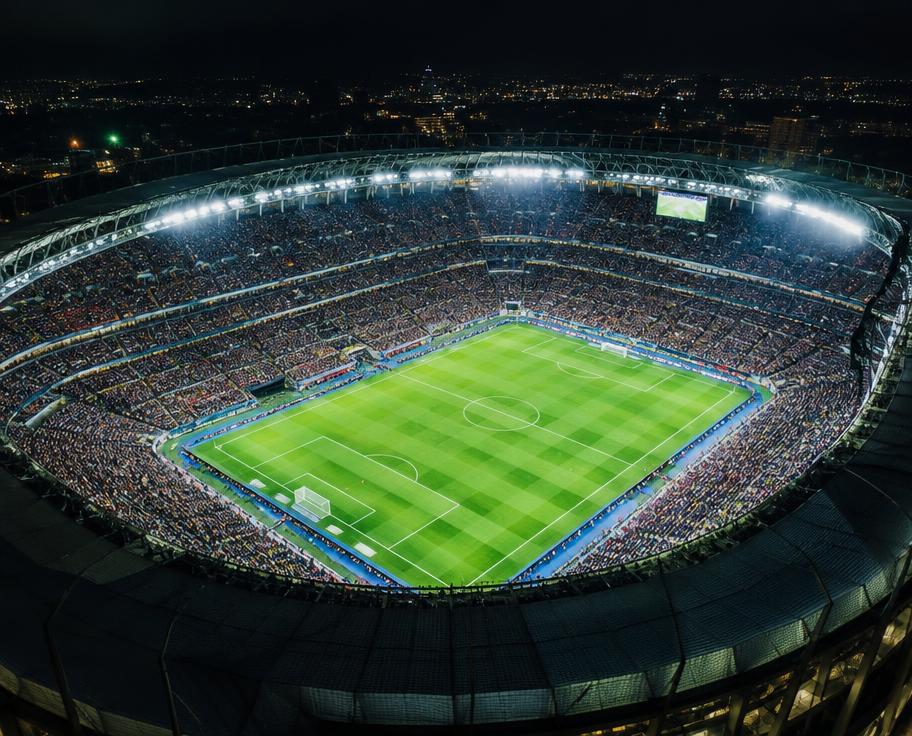
On Thursday 11 June 2026, Mexico face South Africa at the Estadio Azteca in Mexico City in the opening match of the 2026 FIFA World Cup. The tournament runs for 39 days — the longest in World Cup history — across 16 cities in the United States, Canada and Mexico, concluding with the final at MetLife Stadium in New Jersey on 19 July.
By any measure, it is the largest sporting event ever staged. 48 nations. 104 matches. 16 host cities. Three host countries. And an economic footprint that dwarfs every previous edition of the tournament.
Here is what the scale of that footprint actually looks like.
The Global Economic Impact: $41 Billion
Official impact assessments — including socioeconomic studies conducted in partnership with the World Trade Organisation and FIFA — indicate the 2026 World Cup could inject up to $41 billion into worldwide GDP across the tournament period.
That figure encompasses the full range of economic activity generated by the event: international travel, accommodation, food and beverage, merchandise, broadcast rights, sponsorship, ticketing, and the sustained infrastructure investment made by host cities in preparation for the tournament.
To understand the scale, consider the comparison made by FIFA President Gianni Infantino when describing the World Cup to Fox Sports: "The Super Bowl, which is fantastic, has what, 120 to 130 million viewers? The World Cup has 6 billion. A World Cup is 104 Super Bowls in a month — which is three Super Bowls a day."
The economic logic follows the same arithmetic. The Super Bowl is the single largest annual economic event in American sports. The World Cup, compressed into 39 days, is in a different category entirely.
What the Host Countries Stand to Gain
The World Travel and Tourism Council's 2026 Economic Impact Report, published last week, projects significant tourism GDP growth across all three host nations as a direct result of the tournament.
Canada is forecast to see the strongest tourism growth, with a 6.4 per cent increase in sector GDP. Mexico is projected to expand by 2.4 per cent. The United States is expected to grow by 2.1 per cent.
The US alone will welcome 1.24 million international visitors directly attributable to the tournament across its 16 host cities. Hotel room revenues are expected to increase anywhere from 7 to 25 per cent in June 2026, with the largest increases expected around match days.
At city level, the numbers are equally striking. Kansas City, hosting six matches, is expecting 650,000 visitors and a $653 million economic impact. Airbnb hosts in the 16 US host cities are projected to generate over $2.6 billion in revenue across the tournament.
At the regional level, Atlanta, Dallas, Houston and San Antonio alone are projecting a combined economic impact of $3 to $4 billion. The broader North American short-term economic activity figure is estimated at over $5 billion, supporting approximately 40,000 jobs and more than $1 billion in incremental worker earnings.
The Prize Money: $871 Million — Who Gets What
The 2026 World Cup features the largest prize pool in the history of the tournament — by a significant margin.
FIFA has confirmed total team payments of $871 million — a 65 per cent increase on the $440 million distributed at Qatar 2022 and a new all-time record.
The breakdown is as follows:
The 2026 World Cup champion will earn $50 million in prize money. The runner-up will earn $33 million. Third place receives $29 million. Fourth place earns approximately $27 million. Teams knocked out in the group stage are still guaranteed at least $9 million each.
For context — every team that qualifies for the World Cup, regardless of how far they progress, receives a minimum of $9 million simply for participating. For many of the 48 qualifying nations, that figure represents a transformational injection of funds into their domestic football infrastructure.
The prize money does not flow directly to players — it is paid to national associations, who then distribute to their member federations and clubs according to their own agreements. UEFA clubs, whose players participate in the tournament, receive compensation through FIFA's Club Protection Programme for the period their players are on international duty.
The Broadcast Numbers: 6 Billion Viewers
The commercial engine that makes prize money of this scale possible is broadcasting — and the 2026 World Cup is set to rewrite the record books here too.
FIFA is projecting that approximately 6 billion people will engage with the tournament in some form across traditional broadcast, streaming, digital platforms and out-of-home viewing — a figure that would make it the single most-watched sporting event in the history of global media.
The 2026 World Cup final at MetLife Stadium is projected to draw approximately 1.8 billion global television viewers — a new all-time record surpassing the Qatar 2022 final between Argentina and France, which drew approximately 1.5 billion viewers.
FIFA's total revenue for the 2026 World Cup year is projected at approximately $9 billion, anchored by approximately $3.9 billion in broadcasting rights and complemented by strong growth in marketing rights and a substantial uplift in hospitality and ticketing revenue.
Broadcast rights revenue is projected above $4.2 billion for the event cycle. Sponsorship revenue is projected above $2.8 billion. Global sports betting on the 2026 World Cup is projected to surpass $150 billion — compared with approximately $35 billion generated by the 2022 World Cup.
YouTube and FIFA have reached a deal to live-stream the first 10 minutes of every match worldwide — a strategic move that extends the tournament's reach into markets where traditional broadcast rights may not cover all audiences.
In-Stadium: Five Million Fans
FIFA expects more than five million fans to attend the tournament's 104 matches — a figure that would break the in-person attendance record set at USA '94, the last time America hosted the World Cup.
The expanded format — 48 teams playing 104 matches compared to the traditional 32 teams and 64 matches — means more games, more tickets, more fans in seats and more spending in host city economies across 39 days.
The tournament opens with Mexico versus South Africa at Estadio Azteca on June 11 — a historically significant opening match — and concludes with the final at MetLife Stadium, New York/New Jersey, on July 19, 2026.