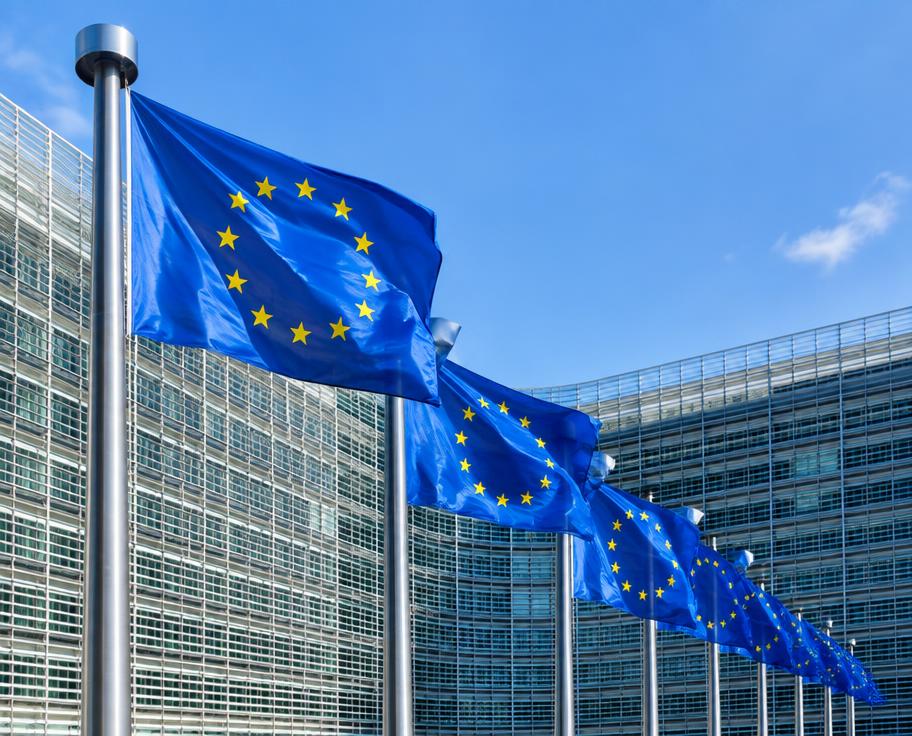
This is not a story about tomorrow. It is a story about today.
The International Protection Act 2026 commenced this morning, June 12 — representing the most significant reform of Irish asylum laws in the history of the State and giving effect to the EU Migration and Asylum Pact. (Wikipedia) The Pact has been two years in the making, debated fiercely in the Oireachtas and across Irish society, and its arrival marks a fundamental shift in how Ireland manages asylum, migration and international protection.
For Irish businesses, the Pact is not an abstract policy development. It affects the labour market, the talent pipeline, the operational environment and the broader economic context in which Irish companies operate. Understanding it clearly — without the noise and disinformation that has surrounded it — is a business imperative.
What the Pact Actually Is
The EU Migration and Asylum Pact is the most significant reform of the Common European Asylum System in over a decade. It entered into force on 11 June 2024, with its main provisions set to apply from 12 June 2026. (Irish Examiner)
It introduces a new legal framework governing screening, border procedures, responsibility allocation between Member States, detention, return, and monitoring mechanisms. Ireland has opted into seven Pact instruments. (Irish Examiner)
Ireland chose to opt into key elements of the Pact following votes in the Oireachtas — it was not compelled to participate. Ireland enjoys special opt-outs in the areas of justice and home affairs. (Germanwatch e.V) The Government made a deliberate policy decision, and the International Protection Bill 2026 was the domestic legislative vehicle to give it effect.
The New Processing System — How It Works
Under the 2026 Act, asylum seekers will undergo screening at Citywest. A new system has been piloted for 10 months under a transition project, which received 2,272 applications. (RTÉ)
Upon arrival to the State, applicants will be required to go through screening, which will involve enhanced security and identity checks and the taking of biometric data. (Wikipedia)
From 12 June 2026, asylum applicants submit an application for international protection at a designated reception centre. Designated reception centres have a multi-disciplinary team on site. Applicants can register an application, get legal counselling and advice, and get a vulnerability assessment. (The Irish Times) The screening process takes a maximum of seven days.
Once screened, applicants are placed into one of three tracks: the regular asylum procedure, an accelerated border procedure, or a return procedure.
Decisions on standard cases will be made within six months, three months for accelerated cases, and 12 weeks for border procedures including appeals and return decisions. (Medical Independent)
This represents a dramatic compression of timelines. The new Act imposes a strict six-month limit to complete every asylum case — three months for a first-instance decision and three months for an appeal — replacing today's average processing time of more than two years. (Department of Health)
The Backlog Problem
The scale of the challenge Ireland faces in implementing this should not be underestimated. The appeals to the International Protection Appeals Tribunal grew from 895 at the end of 2022 to 19,000 by January 2026. (Medical Independent)
In 2025, the International Protection Office delivered over 20,200 first-instance decisions — a 44% increase compared to the 14,100 decisions made in 2024. (Northern Ireland Executive) The system is processing faster, but demand has outpaced output. The implementation of the Migration Pact is widely regarded as a more significant challenge for Ireland than for other European countries. Unlike many EU member states, which have been subject to legally binding migration and asylum measures since 2013, Ireland was not bound by those instruments because it did not opt into them. (Medical Independent)
New Institutions — TARA Replaces IPAT
The International Protection Appeals Tribunal will be wound down over time to make way for the Tribunal for Asylum and Returns Appeals — TARA. (Medical Independent) TARA is designed to deliver faster, more streamlined appeal decisions with fewer oral hearings and greater use of video testimony.
Mandatory Solidarity — The Burden-Sharing Mechanism
One of the most significant structural changes under the Pact is the replacement of the Dublin Regulation — the long-criticised system that placed most of the asylum burden on Mediterranean border countries — with a mandatory solidarity mechanism.
The new Asylum and Migration Management Regulation replaces the Dublin Regulation and introduces a mandatory solidarity system. This ensures all Member States share responsibility by hosting asylum seekers, providing financial contributions, or sending operational support. (Irish Examiner)
Ireland must participate in this solidarity mechanism. Countries can choose to accept relocated asylum seekers, make financial contributions to the EU, or provide operational support to frontline member states.
The Labour Market Dimension
For Irish businesses facing persistent labour shortages across construction, healthcare, hospitality and technology, migration policy is not a peripheral concern — it is central to workforce planning.
Ireland and Europe's population is ageing rapidly and migrants are essential to filling labour market gaps. (Central Statistics Office) The Pact's stated ambition of creating faster, more efficient processing — cutting average wait times from two years to six months — could, if successfully implemented, accelerate the pathway by which people with skills Ireland needs can begin contributing to the economy.
The EU Talent Pool aims to connect employers with jobseekers from outside the EU in sectors facing labour shortages. The Blue Card Directive makes it easier for highly qualified workers and employers to match skills with opportunities across Europe. (The Irish News)
For businesses in sectors with acute skills shortages — particularly construction, pharma, IT and healthcare — a more functional, faster migration system is commercially significant.
The Human Rights Debate
The Pact has not passed without controversy. Human rights organisations including NASC have highlighted serious issues in the International Protection Bill 2026, including provisions that could criminalise people for assisting those going through the screening process, broad powers of detention at an early and vulnerable stage, and the risk of children being detained. (Irish Examiner)
Irish MEPs across Government and opposition parties have raised concerns about the establishment of "return hubs" ahead of the Pact's enactment, with some warning that elements of the Pact are "incredibly regressive." (marketbeat)
Minister for Justice Jim O'Callaghan has acknowledged the concerns while defending the overall framework. "This government fundamentally believes in the right to claim asylum. We will always uphold our obligation on this important principle of international law for those who need our protection," (Irishhealth) O'Callaghan said. "The Pact National Implementation Plan sets out how Ireland will transition away from the current complex asylum system towards a future streamlined model which aims to be a structural and permanent solution to the challenges of managing migration." (The Irish Times)
What Changes Today
Applications submitted before 12 June 2026 continue to be dealt with under the International Protection Act 2015. This means there are two parallel international protection processes in place for a period of time. (The Irish Times) Some measures apply from 1 July 2026.
The Eurodac database — the EU's centralised biometric system for asylum seekers — is upgraded from today, with updated fingerprint and biometric rules improving identification of asylum seekers and irregular border-crossers across the EU.
The Bottom Line
The EU Migration and Asylum Pact is live in Ireland from today. It is the most sweeping reform of the State's asylum system in its history — compressing processing times from years to months, creating new institutions, embedding Ireland in an EU-wide solidarity mechanism and overhauling the entire journey from arrival to decision. For Irish businesses, it matters because migration policy is labour market policy. A faster, fairer, more functional system — if it delivers on its ambitions — means a more agile workforce pipeline for an economy that needs one. The coming months will determine whether the implementation matches the intent.