The Deal
On 14 August 2026, Ferrero Group announced it had signed an agreement to acquire Purely Elizabeth, the Boulder, Colorado-based modern wellness breakfast brand known for granola, oatmeal, cereal and protein products built around ancient grains and functional ingredients. Financial terms were not disclosed by Ferrero, though Axios had reported earlier this year that the founder-led company was seeking a sale north of $600 million. Forbes subsequently reported the deal at an estimated $800 million.
Purely Elizabeth will continue to operate as a standalone brand within the Ferrero Group, with Founder and CEO Elizabeth Stein continuing in her role alongside the existing leadership team. For Stein, that continuity was central to her decision to sell. “I picked Ferrero because I know the brand will survive there,” she said in a Forbes interview published this week. “This is a forever home. Ferrero was incredibly exciting to me as an 80-year-old family-owned company.” In the official announcement, Stein said: “Building Purely Elizabeth from an idea 17 years ago into the brand it is today has been one of the most rewarding journeys of my life, and I’m incredibly proud of what our team has accomplished. As I thought about the next chapter, finding a partner who understood what makes Purely Elizabeth special and shared our commitment to quality, innovation, and building for the long term was incredibly important to me. In Ferrero, we’ve found a family-owned company that believes deeply in what we’ve built and sees the tremendous opportunity still ahead. I couldn’t be more excited to continue leading Purely Elizabeth alongside our team as we bring our mission and products to even more people.”
The Beginning: A Triathlon, a Muffin and a Kitchen in New York
Elizabeth Stein was born in Philadelphia and was working in sales and marketing for a handbag company in New York City when, through a personal trainer boyfriend and her own growing involvement in marathons and triathlons, she developed a deepening interest in health, nutrition and the relationship between what goes into the body and how it performs. In 2007, she left her marketing career to complete a health coach training programme at the Institute of Integrative Nutrition — a decision she described as “truly a life-changing moment.” She qualified as a certified holistic nutrition counsellor and set up her own private practice, working with clients one-on-one and teaching cooking classes from her sister’s apartment.
While working with clients — many of whom were gluten free — she found herself unable to recommend sweet food products on grocery shelves that met her nutritional standards. Everything was too unhealthy. So she began experimenting with the nutrient-dense ingredients she was studying — chia seeds, millet flour, coconut oil, quinoa, amaranth — and developed her own recipes.
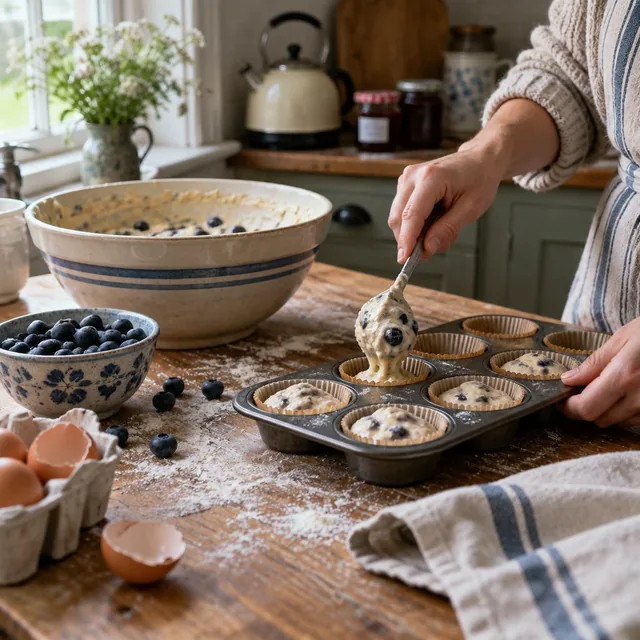
The story that started everything happened in September 2008, when Stein brought freshly baked blueberry muffins packed with superfoods to a triathlon in Westchester, New York. She had previously used post-race tables to promote her private practice. This time, she brought the muffins. They were far more popular with competitors and potential clients than her counselling services. Person after person asked where they could find them outside the race.
In 2009, Stein — then 28 years old — founded Purely Elizabeth. She started with $5,000, making baking mixes in her New York City apartment kitchen and selling them online and at local stores in New York and Philadelphia. The products were built around the superfood ingredients she had been studying and working with: ancient grains, chia seeds, coconut sugar, organic and gluten-free formulations at a time when most of those terms were still largely unfamiliar to mainstream grocery shoppers. As Stein herself has noted, she was explaining what chia seeds were to every retailer she approached. She wrote down the words “Start a natural foods company” in class one day at the Institute for Integrative Nutrition when the teacher asked students to describe their unpredictable future.
The Build: From $5,000 to $147 Million to $300 Million
The commercial development of Purely Elizabeth from its apartment-kitchen origins to a nationally distributed brand took more than a decade of consistent product development, retailer relationship-building and brand investment. The company reached profitability in 2023. By early 2025, Purely Elizabeth was bringing in $147 million in annual sales with a team of 50 employees. The product range had expanded from the original baking mixes to encompass 40 kinds of granolas, oatmeals and cereals, with a more recent expansion into protein products — a move into a category that has grown substantially as the consumer appetite for functional, high-protein foods has accelerated alongside the GLP-1 weight loss medication wave reshaping how Americans think about food and nutrition.
In the two years from 2024 to 2026, Purely Elizabeth more than doubled its sales. The company was on track to top $300 million in revenue by the end of 2026 — a trajectory that made it one of the faster-growing brands in the natural foods and better-for-you breakfast category. The brand sells nearly four times faster than overall category growth and is now in more than 30,000 stores across the United States. The granola category itself has grown significantly during the period Purely Elizabeth has been operating — when Stein started the business, the entire granola category was estimated at $300 million in retail sales. Today it is more than four times that size.
In 2022, Purely Elizabeth raised a $50 million Series B round led by the founder of General Mills’s venture fund, aimed at fuelling continued growth. That round — the company’s most significant external capital raise — provided the operational and marketing investment to accelerate distribution and brand awareness without requiring a sale at that point. It also provided external validation of the business model from investors with deep experience in the food and consumer goods sector.
The Category She Helped Define
Purely Elizabeth’s product story is inseparable from the broader shift in American consumer food culture over the past fifteen years. When Stein was developing her first recipes in 2007 and 2008, the ingredients she was building around — chia seeds, quinoa, amaranth, coconut sugar, ancient grains — were genuinely obscure to most consumers and to most retailers. Whole Foods was the primary retail channel for natural foods; the major grocery chains largely did not carry this category. The concept of a better-for-you product that was simultaneously nutritionally serious and genuinely good to eat was not yet a mainstream commercial proposition.
What Purely Elizabeth represented, in its earliest iterations, was a bet that the mainstream would eventually follow the direction that nutrition science and functional food thinking were pointing — that consumers would come to want food that was both pleasurable and purposeful, that the idea of a granola made with ancient grains and sweetened with coconut sugar rather than refined sugar would one day sit comfortably on a Kroger shelf alongside conventional breakfast cereals. That bet proved correct, and the timing of Purely Elizabeth’s build — growing consistently through the period in which the better-for-you category moved from niche to mainstream — gave it the brand equity and distribution depth to benefit fully from that transition rather than watching it from the sidelines.
Why Ferrero
For Ferrero, the acquisition of Purely Elizabeth gives more weight to its ambitions in North America, following its $3.1 billion purchase of WK Kellogg. Ferrero has spent $8 billion on acquisitions in the last decade to expand its presence in North America, buying Nestlé’s US chocolate business in 2018 and Kellogg’s cookies and fruit snacks business. The Purely Elizabeth acquisition is a different kind of deal — it is not the purchase of an established legacy brand but the acquisition of a high-growth founder-led company with a clearly differentiated wellness positioning and a revenue trajectory that makes the acquisition price a bet on future performance as much as a reflection of current earnings.
Ferrero intends to support Purely Elizabeth’s next phase of growth through continued product innovation, operational capabilities and expanded distribution, helping the brand reach more consumers while preserving its distinct identity and commitment to quality. The international distribution opportunity — Stein has said she is looking forward to the ways in which Ferrero will help develop the product pipeline and eventually take it international — is one of the most significant aspects of what the acquisition unlocks. Purely Elizabeth is currently predominantly a US brand. Ferrero’s global distribution infrastructure creates a pathway to international markets that a founder-led company of Purely Elizabeth’s size could not realistically access independently.
The decision to keep Stein in the CEO role and to operate the brand as a standalone entity within the Ferrero Group reflects a model that large food companies have increasingly adopted when acquiring high-growth founder-led natural food brands — preserving the brand culture, product authenticity and leadership continuity that drove the growth, while providing the capital, infrastructure and distribution scale that the brand needs for its next phase. It is the same model that has been applied to acquisitions including Clif Bar and others within the better-for-you food sector.
What the Sale Represents
The sale is among the largest deals recently in the natural foods industry and puts Stein in a position that few food founders ever achieve. Starting a business with $5,000 from an apartment kitchen, building it without outside capital for the first thirteen years, reaching profitability, raising a $50 million Series B, doubling revenue in two years and completing a sale estimated at $800 million to one of the world’s most recognised food companies — while retaining the CEO role — is a commercial outcome that describes both the scale of what was built and the quality of the decisions made along the way about when to grow, when to raise capital and when to sell.
The Forbes article published this week chose the title “Feel The Fear And Do It Anyway” — a phrase that Stein herself has used when discussing the mindset required for entrepreneurship. It is a phrase that captures something about the founder journey that the financial figures, as significant as they are, do not fully express: the sustained commitment to a product vision at a moment when the market had not yet fully formed around it, the willingness to build slowly and carefully rather than chasing scale at the expense of product quality, and the patience to wait for the right partner at the right moment rather than accepting the first offer.
The Bottom Line
Elizabeth Stein founded Purely Elizabeth in 2009 with $5,000 and a product range she made in her New York City apartment kitchen. Seventeen years later, the company is in more than 30,000 US stores, is on track to generate $300 million in revenue in 2026 and has been acquired by Ferrero Group in a deal estimated at $800 million. She will remain CEO. The brand will remain standalone. The next chapter is international. It is the kind of founder story that the food industry produces rarely — and that the natural and better-for-you category has produced almost never at this scale.