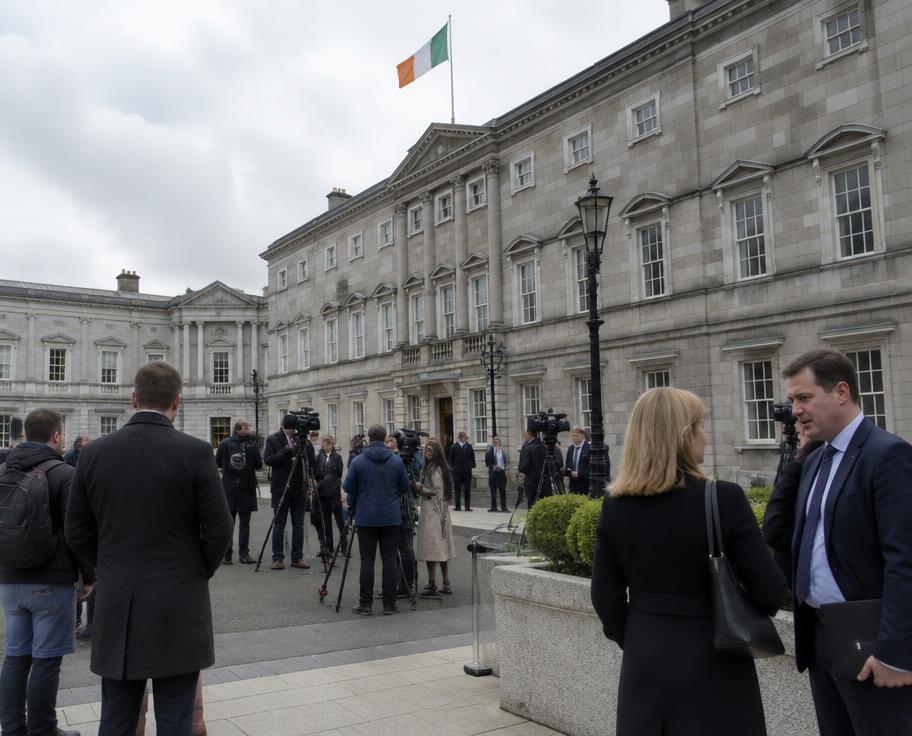
Every Budget gets the same treatment in the national press: a few headline measures, a couple of political rows, and a lot of commentary that has nothing to do with the day-to-day reality of running a small business in Ireland. This is the version written for the people who actually have to implement it.
1. The SME Cost-of-Business Support is back — with conditions
The temporary cost-of-business scheme has been extended into 2026, but the eligibility criteria have tightened. Businesses with a rateable valuation under €30,000 remain in scope, but you must now be fully tax compliant and registered for online filing with your local authority before you can claim. If you missed the 2025 deadline, the 2026 round opens in Q1 — diary it now.
2. PRSI is going up — plan for it
Employer PRSI rises by another 0.1 percentage point in October 2026 as part of the multi-year increase funding the State pension. On a €45,000 salary, that is roughly €45 per employee, per year. Trivial on one head — material across a team of twenty. Build it into your 2026 hiring budgets now rather than discovering it in Q4.
3. The R&D tax credit just became more useful
The headline rate of the R&D tax credit has been increased and the first-year payable threshold has been raised, meaning more cash back, sooner, for businesses doing qualifying development work. If you have ever been told your work "might" qualify but found the paperwork too heavy, this is the year to revisit it with an advisor — the breakeven on the application cost has shifted considerably.
4. VAT on hospitality stays at 9% — for now
The reduced 9 per cent VAT rate for food-led hospitality has been retained for 2026. The Department has signalled this is a final extension, with a review due before Budget 2027. Hospitality operators should treat this as a one-year runway, not a permanent settlement.
5. The minimum wage has moved again
The national minimum wage rose to €14.15 per hour from January, the latest step on the path to a Living Wage benchmark of 60 per cent of median earnings by 2027. For retail, hospitality and personal-services businesses, this is the single biggest cost line to model — and the one most likely to require a price review before the end of Q2.
What to do this quarter
Three concrete actions for any Irish SME owner reading this. First, re-run your payroll model with the new PRSI and minimum wage figures and confirm your gross margin still holds. Second, check your eligibility for the cost-of-business scheme with your local authority before the application window opens. Third, if you have any development, process improvement or software build under way, get an R&D credit conversation on the calendar — the maths is genuinely different this year.
Budget 2026 is not a transformational Budget for Irish SMEs. But it is one that quietly rewards the operators who pay attention.