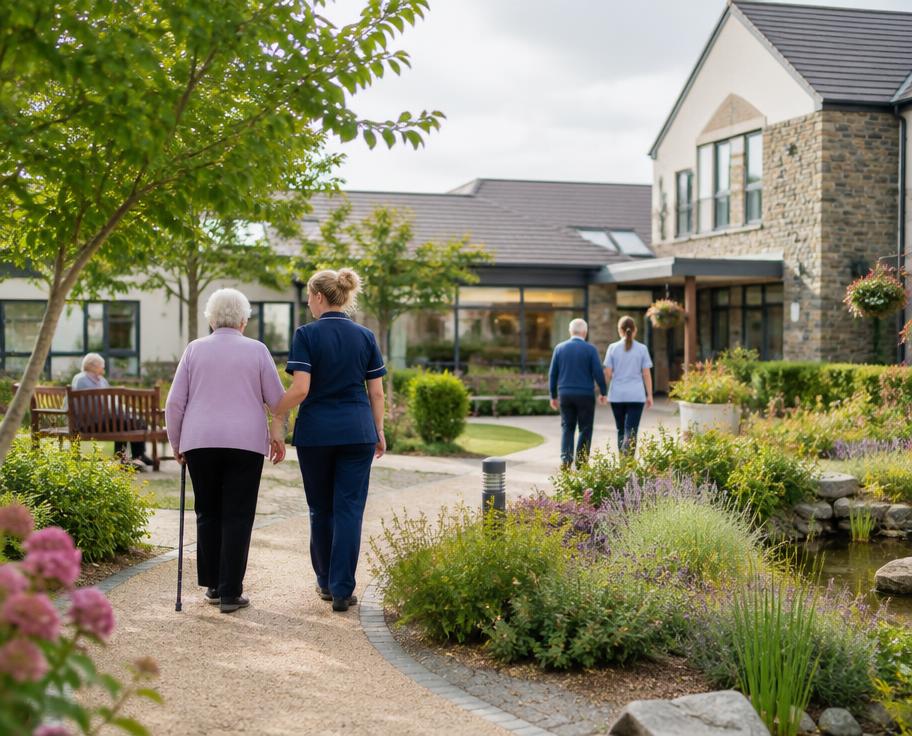
From the age of 15, Adam Keane's weekends and summers looked very different to most teenagers. While others were heading to Croker or hanging around town, he was working in his family's nursing home in Dublin — a business his grandfather founded and his father continued for more than thirty years.
It wasn't a summer job. It was a formative education in how people age, how families worry, and how care homes actually operate on the inside — the paperwork, the staff rotas, the phone calls to anxious relatives, the gaps that no one had ever thought to fix with technology.
He didn't stay in care. He went to UCD to study economics and finance, completed a master's at the Smurfit Business School, and spent several years in corporate finance. By most measures, he had left that world behind.
But he hadn't forgotten it.
The Conversation That Started Everything
When Keane decided to build a software company, he did something most founders never do — he went to the person who knew the problem best. He sat down with his father and asked him what was actually broken in care home management. The answer was immediate and clear: communication. With staff. With families. With the relatives who had no easy way of knowing what was happening with their loved one from one day to the next.
That single conversation became Altra.
Launched in late 2019, Altra began with a staff communications tool — a professional SMS platform built specifically for care home teams, replacing the chaotic mix of WhatsApp groups, noticeboards and word-of-mouth that most homes were relying on. Within a year, Keane had developed a second product: Altra Family, which allows relatives to send photos, messages and updates directly to residents, with the platform generating personalised weekly printed newsletters — particularly powerful for residents living with dementia or cognitive impairment, for whom a physical photograph or handwritten note can spark conversation and connection in ways a screen never could.
"From personal experience, I know how much a video of grandchildren playing or an old photo can mean to someone living in care," Keane has said. "I wanted to make it as simple as possible for families to provide these things for their loved ones."
Covid Changed Everything — And Proved the Product
Altra Staff launched in September 2019. Altra Family followed in 2020. The timing, through no design of Keane's own, turned out to be extraordinary.
When Covid-19 hit Ireland and care homes went into lockdown, families were suddenly cut off from their loved ones entirely. Visits stopped. Phone calls were the only lifeline. Care home managers — already overwhelmed — were fielding hundreds of anxious calls a week from relatives with no other way of getting information.
Altra Family became essential almost overnight. The ability to send photos, post updates and receive communications directly through the platform — without putting extra burden on already-stretched care staff — addressed a crisis that the entire sector was scrambling to manage. For many care homes, it was the first time technology had genuinely solved a human problem at the exact moment it was most needed.
That kind of proof point is worth more than any investor pitch.
Built Without a Single Outside Investor
What makes Altra's story genuinely unusual in the Irish startup landscape is how it got to where it is. The company bootstrapped its way to profitability — no venture capital, no seed rounds, no Series A. While Irish tech startups were raising tens of millions and making headlines, Altra was quietly, methodically growing on its own terms.
It worked. The platform is now live in more than 1,000 care homes across Europe, with Altra working alongside some of the continent's largest care groups. In March 2026, Sifted ranked Altra at number 41 in its prestigious top 100 European startups list — placing it among the most significant emerging technology companies on the continent. For a bootstrapped Irish company that started with one product and a chat with a father, that ranking is remarkable.
Keane has described entrepreneurship as something he absorbed by osmosis growing up — his grandfather and father were both entrepreneurs, building not just the nursing home but construction businesses alongside it. "Being around that environment my whole life definitely put me on the path I'm on," he has said.
The Market Nobody Was Chasing
The care sector is not a glamorous space. It doesn't generate the headlines of fintech or AI. But the numbers tell a different story — and Keane understood them long before most technology founders were paying attention.
Ireland alone has roughly 450 nursing homes with 32,000 residents. The UK has 12,000 care homes with 450,000 residents. In the United States, there are 50,000 senior living communities housing four million residents. The global elder care market — covering long-term residential and home care — is valued at approximately $3.7 trillion and growing steadily as populations across the western world age.
Keane saw a vast, chronically underserved market hiding in plain sight. One he understood personally, emotionally and operationally in a way no outside investor or product team could replicate. The Silver Economy, as it is increasingly called, is one of the fastest-growing population cohorts in western economies. Technology investment in the sector has lagged far behind the demographic reality — and that gap is exactly where Altra operates.
What Altra Actually Does
At its core, Altra is a resident experience and family engagement platform. It connects care teams, residents and their families through a single, easy-to-use system that removes friction from every interaction — shift communications, family updates, visit scheduling, personalised newsletters, photo sharing and wellbeing tracking.
For residents with dementia or cognitive impairment, the weekly printed newsletter — generated automatically from family uploads — creates a tangible, physical memory aid. Staff can use it as a conversation starter. Families who live abroad, or who simply can't visit as often as they'd like, can stay meaningfully connected without placing extra demands on an already pressured care team.
The platform's COO, Sebastien Destenbert, joined the company partly from personal experience. "For years I had my grandmother in a nursing home that I could not visit because I was abroad," he has said, "and it was very difficult to organise a video call." That kind of lived connection to the problem runs through the entire Altra operation — from the founder down.
The Bottom Line
Adam Keane didn't disrupt an industry from a co-working space with a deck full of market projections. He built something genuinely useful from thirty years of family experience, launched it without fanfare at exactly the right moment, and scaled it to over 1,000 care homes across Europe without giving away a single share to outside investors. In a startup culture obsessed with fundraising rounds, valuations and exit multiples, that is its own kind of leadership. And for Ireland's rapidly ageing population — and the families navigating that reality every day — it is exactly the kind of company that deserves to be better known.